

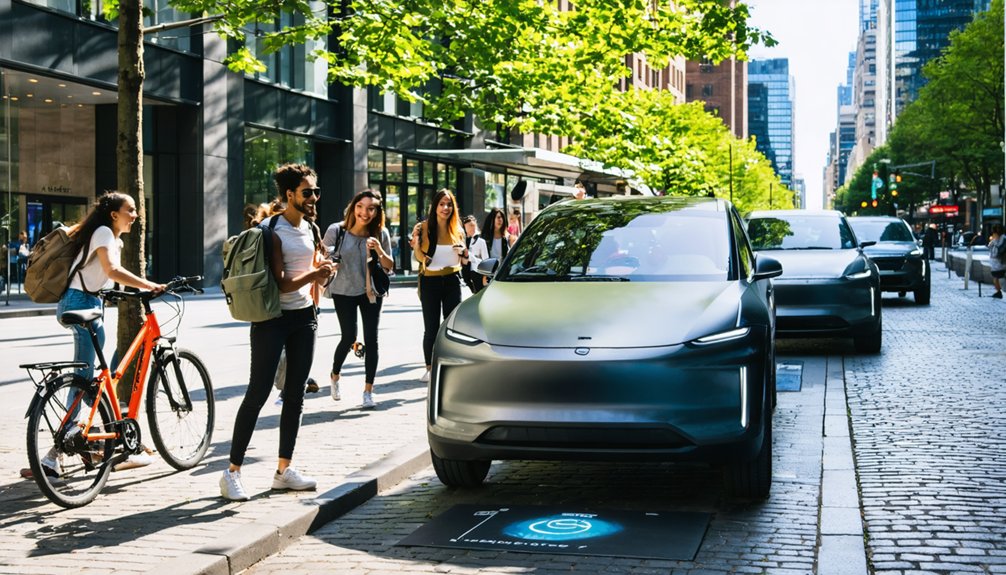

The rise of car sharing indicates a significant shift towards sustainable mobility solutions. Driven by urbanization and changing consumer preferences, the market is expected to grow exponentially through 2033. Technology enhances user experiences with features like mobile payments and real-time tracking, while younger demographics accept shared mobility due to economic factors. As the public moves away from private vehicle ownership, car sharing redefines transportation norms, laying the groundwork for a more connected and eco-friendly future. More perspectives await.
Highlights
- Car sharing is rapidly growing, projected to reach $24.4 billion by 2033, driven by urbanization and shifting consumer preferences towards sustainable transport.
- Younger demographics, particularly those aged 25-34, are leading the adoption due to economic constraints and changing lifestyle choices favoring shared mobility.
- Technological advancements like mobile payments and real-time tracking enhance user convenience, making car sharing more appealing and accessible.
- Car sharing reduces the need for private vehicle ownership, integrating seamlessly with public transit and promoting sustainable urban infrastructure.
- Awareness of environmental issues fuels demand for car sharing, with electric vehicle fleets attracting eco-conscious users and contributing to market growth.
Understanding the Growth of the Car-Sharing Market
The car-sharing market has experienced outstanding growth, changing from a niche alternative to a mainstream mobility solution. Valued at approximately USD 8.93 billion in 2024, it is projected to reach around USD 24.4 billion by 2033, driven by shifting consumer behavior and urbanization trends. This change reflects a shift towards sustainable transport options as awareness about environmental issues grows. With significant market forces in Europe and a solid foothold in North America, the demand for car sharing highlights a collective preference for convenient, cost-efficient mobility. Urbanization, rising environmental awareness, and government support are also key factors bolstering the market. As urban congestion escalates, consumers increasingly gravitate toward shared solutions. Moreover, the car-sharing market is expected to reach around $9 billion by 2026 as more individuals opt for shared transportation. The projected adoption rates indicate that nearly 10% of individuals may choose car sharing as their primary mode of transport by 2025, reshaping urban mobility.
The Role of Technology in Shaping User Experiences
A revolutionary shift in the car-sharing scenery has been driven by advancements in technology, fundamentally enhancing user experiences. The integration of mobile payments has streamlined bookings and customer support, minimizing friction and guaranteeing access to smart vehicles is effortless. Keyless entry systems and real-time tracking improve convenience, promoting user satisfaction through reduced wait times and uncertainties. Additionally, P2P car sharing has become more seamless with technological innovations, enabling more people to leverage idle vehicles for economic benefits. As the car sharing industry expands, personalized interfaces and AI-driven customer service further uplift engagement, making interactions more intuitive. Additionally, data-driven perceptions fuel continuous improvement, while features like voice-activated assistants add layers of safety and ease to the driving experience. Connectivity in vehicles, coupled with adaptive pricing models, guarantees peak utilization and a seamless connection to broader mobility ecosystems, reinforcing a sense of belonging among users in this changing terrain.
Demographic Shifts Influencing Car-Sharing Adoption
Demographic shifts are reshaping the scenery of car-sharing adoption, revealing distinct patterns that highlight the preferences and behaviors of various age groups. The dominant adoption occurs within the 25-34 age group, fueled by urban trends that favor flexibility and convenience.
Younger users aged 18-34, particularly those in urban environments, show increased reliance on shared mobility due to economic constraints and lifestyle choices. Although older adults (55+) engage less, their concerns regarding safety reflect crucial priorities in car-sharing services. The carsharing market, valued at $3507.9 million in 2025, underscores the rising trend among younger demographics seeking affordable transportation options. The increasing popularity of electric vehicle fleets in car-sharing models also attracts environmentally conscious users, further boosting market growth.
Rural options also emerge, responding to regional needs amid economic challenges. Enthusiasm for environmental sustainability serves as a unifying value, engaging diverse demographics in the car-sharing movement, reinforcing a collective desire for responsible mobility solutions, and encouraging people to take a plunge into the car-sharing market, driven by essential priorities in car-sharing services.
Assessing Business Models and Profitability Strategies
Traversing the terrain of car-sharing requires a keen understanding of diverse business models and profitability strategies. Profit models vary substantially, with station-based models often outpacing their free-floating counterparts due to lower operational costs and initial investments. Effective cost analysis identifies primary expenditures, such as vehicle downtime, maintenance, and insurance, while optimizing vehicle utilization and pricing strategies enhances revenue generation. Diverse revenue streams—including member fees, advertising, and branding partnerships—contribute to financial stability. Additionally, maintaining a balanced fleet size is vital; too few vehicles limit access, while excess leads to waste. Effective management of vehicle lifecycles significantly contributes to the bottom line and profitability of the sharing business.
Navigating Industry Challenges and Opportunities
Car-sharing operators face a scenery rife with challenges and opportunities that demand strategic exploration. Key among these are regulatory obstacles and insurance intricacies that threaten operational fluidity. Inconsistent rules across jurisdictions can obscure compliance, complicating the enforcement of fines and driver responsibilities.
Meanwhile, high insurance premiums and intricate claims processes deter growth, as liability intertwines with multiple users driving company vehicles. The pressing need for standardized insurance products could mitigate risks and enhance user trust. Additionally, traversing urban infrastructure constraints, such as limited parking and charging stations, necessitates collaboration with local governments.
Ultimately, successful operators must innovate and adapt, simultaneously addressing these industry challenges while capitalizing on the revolutionary potential of car-sharing systems to revolutionize.
Key Players in the Car-Sharing Landscape
The car-sharing scenery is shaped by a diverse array of key players, each contributing unique strengths and operational models to the developing market.
Leading the charge, Zipcar captures approximately 34% of the U.S. market, while Getaround offers on-demand access and convenience globally.
Share Now, thriving in Europe, expands its reach with innovative fleet management.
Turo stands unrivaled in peer-to-peer rentals, resembling an Airbnb for cars, and Enterprise CarShare caters to various users through its station-based services.
As car trends evolve, these companies provide significant sharing benefits, including reduced costs and improved sustainability.
Together, they nurture a sense of community by enabling individuals to access vehicles seamlessly, addressing the needs of modern urban living, and collectively they will take a plunge into the future of car-sharing.
The Future of Mobility: What’s Next for Car Sharing
As the car-sharing scenery continues to evolve, its future is shaped by significant market growth, technological advancements, and shifting consumer preferences. By 2025, approximately 10% of the population is expected to adopt car sharing as their primary means of transport, reflecting a notable trend towards sustainable transport options.
The integration of electric vehicles into shared fleets highlights the growing commitment to reducing carbon emissions, aligning with urban planning initiatives aimed at creating greener cities. Artificial intelligence enhances user experience and optimizes fleet management, while public-private partnerships facilitate seamless connections between car sharing and public transit. As consumer reliance on private vehicle ownership declines, shared mobility will become an increasingly crucial element of urban infrastructure, promoting a connected community experience.
Conclusion
As car-sharing continues to evolve, its impact on urban transportation and consumer behavior becomes increasingly significant. The convergence of technology and changing demographics nurtures an environment ripe for innovation and growth. While challenges remain, the adaptive strategies employed by industry players signal a promising future for mobility solutions. Ultimately, the rise of car-sharing not only revolutionizes how individuals view ownership but also paves the way for more sustainable and efficient urban living.
References
- https://parseur.com/blog/car-sharing-market
- https://invers.com/en/press-releases/car-sharing-in-2025-insurances-diversification-electrification-and-profitability/
- https://www.autoinsurance.com/research/car-sharing-facts-statistics/
- https://www.atommobility.com/blog/is-car-sharing-profitable-in-2025
- https://www.news.market.us/shared-mobility-statistics/
- https://www.imarcgroup.com/car-sharing-market
- https://www.researchandmarkets.com/reports/5769548/car-sharing-market
- https://www.marketdataforecast.com/market-reports/north-america-car-sharing-market
- https://mobokey.com/top-car-sharing-trends-for-2025-and-how-mobokey-fits/
- https://lbauto.net/the-rise-of-car-sharing-a-comprehensive-look-at-the-evolution-of-car-sharing-services/