

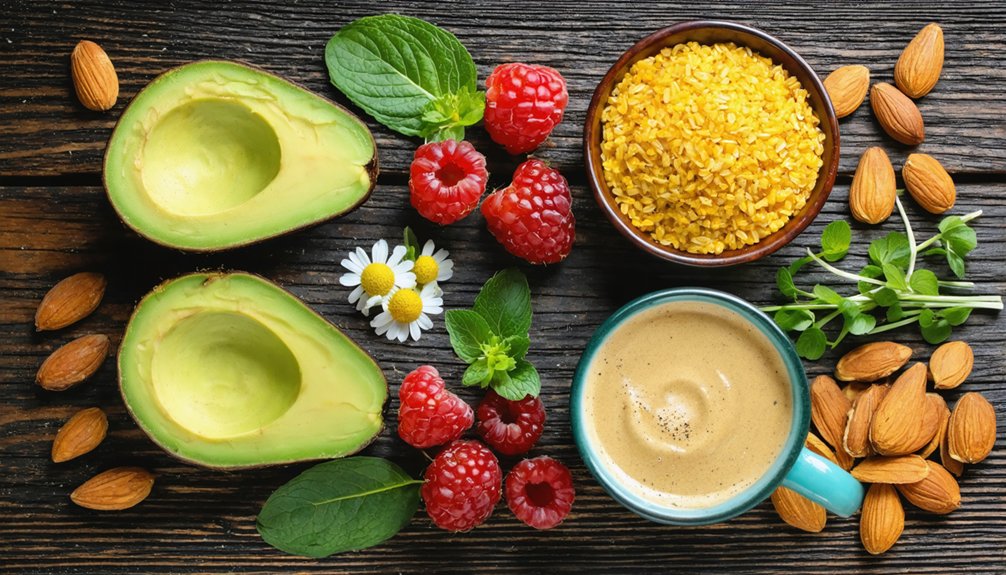

Certain foods substantially enhance focus and energy, vital for ideal brain function. Omega-3 fatty acids, found in fish and nuts, improve cognitive performance. Antioxidant-rich fruits, like berries, protect neurons and augment memory. Dark chocolate enhances mental alertness. Whole grains provide sustained energy through gradual glucose release. Hydrating fruits, such as cucumbers and watermelons, support brain health. Leafy greens improve cognitive function and protect against inflammation. These nutritious choices nurture brain health, and there’s much more to examine.
Highlights
- Incorporate omega-3 fatty acids from sources like fish and walnuts to enhance focus and energy levels.
- Consume antioxidant-rich fruits, such as berries, to improve memory and cognitive abilities.
- Choose whole grains for sustained energy through gradual glucose release and slow digestion.
- Include leafy greens like spinach and kale to protect against neuroinflammation and boost brain function.
- Snack on nuts and seeds to enhance memory performance and reduce cognitive decline.
The Role of Omega-3 Fatty Acids in Focus and Energy
Although often overlooked, omega-3 fatty acids play a crucial role in enhancing focus and energy, substantially influencing cognitive function and motivation. The benefits of these fatty acids, particularly EPA and DHA, extend to improved verbal memory, immediate recall, and enhanced executive function. They increase brain hemoglobin oxygen saturation, suggesting enhanced cerebral blood circulation, which supports overall brain function. Higher doses of omega-3s, around 4 g/day, have shown to improve symptoms of motivation and alertness, particularly in individuals experiencing low mood. The anti-inflammatory properties of omega-3s further contribute to their brain function support, offering a promising avenue for enhancing cognition. In fact, omega-3 supplementation may also help reduce loneliness-related episodic memory impairments, promoting a sense of belonging through improved mental engagement and social interaction. Incorporating omega-3-rich foods into one’s diet may promote a sense of belonging through improved mental engagement and social interaction, particularly for those with high inflammation that may contribute to cognitive impairment.
Antioxidant-Rich Foods for Enhanced Concentration
Antioxidant-rich foods are essential for enhancing concentration and cognitive function, as they combat oxidative stress that can impair brain performance. Consuming fruits such as berries, which are high in antioxidants, has been linked to improved memory and cognitive abilities. Leafy greens and tomatoes, rich in flavonoids and lycopene, also play a significant role in supporting brain health. In addition, the antioxidants found in apples and onions protect neurons from damage, promoting better brain function. Vitamins E and C work synergistically to safeguard cognitive performance, promoting mental clarity. Moreover, dietary patterns centered on antioxidant-rich plant foods can be effective in maintaining cognitive health. A diverse intake of exogenous antioxidants like those found in nuts and seeds further enhances brain protection. Incorporating these foods into one’s diet not only enhances cognitive capabilities but also contributes to overall well-being, promoting a sense of belonging to a community that values health and vitality.
The Power of Dark Chocolate for Mental Alertness
The power of dark chocolate in promoting mental alertness is supported by a growing body of research highlighting its cognitive benefits. Studies indicate that daily consumption of dark chocolate, particularly varieties with 70% cocoa or higher, enhances executive function, memory, and overall focus. Rich in flavonoids, dark chocolate improves processing speed and attention, while also counteracting cognitive deficits due to sleep deprivation. Additionally, participants often report feelings of increased energy and reduced fatigue, correlating with enhanced mental clarity. Recent research has shown that frequent dark chocolate consumers experienced less fatigue and demonstrated improved executive functioning. The chocolate benefits extend across age groups, making it a versatile choice for anyone seeking to enhance their cognitive performance. Notably, studies have found that dark chocolate consumption is associated with increased cerebral blood flow, which may further explain its positive effects on brain function. Embracing dark chocolate as part of a balanced diet can contribute positively to sustained mental alertness and overall brain health.
Nutrient-Packed Nuts and Seeds for Brain Health
Nuts and seeds are not only nutritious snacks but also vital contributors to brain health, offering an array of cognitive benefits. Research indicates that consistent nut consumption can enhance memory performance by up to 16%, particularly benefiting cognitive function in high-risk populations. Varieties such as walnuts are noted for their potential in reducing cognitive decline, while almonds and Brazilian nuts also exhibit varying brain benefits. The rich omega-3 fatty acids, antioxidants, and fiber found in these foods promote a healthier brain environment, improving vascular function and lowering inflammation. Notably, daily nut consumption has been shown to benefit blood flow in the brain, making them a key addition to any diet. For ideal effects, a daily intake of roughly 1 ounce of mixed nuts is recommended, enhancing one’s diet with vital nutrients essential for mental well-being and focus.
Whole Grains: The Secret to Sustained Energy
Although often overlooked, whole grains serve as a powerful source of sustained energy that not only fuels the body but also supports cognitive function. The unique composition of whole grains—brans, germ, and endosperm—ensures a rich supply of nutrients.
The fiber advantages found in these grains promote slow digestion, leading to gradual glucose release that stabilizes blood sugar levels and prolongs focus. Grain benefits extend beyond physical stamina; these nutrients enhance brain health, improve concentration, and reduce inflammation that can impair cognitive function.
Additionally, regular whole grain consumption is linked to reduced risks of chronic diseases, further supporting energy levels and mental clarity. Embracing whole grains can promote a sense of belonging in a community that values health and wellness.
Hydrating Fruits That Boost Focus
Incorating hydrating fruits into the diet complements the sustained energy provided by whole grains, further enhancing cognitive function and focus.
Fruits such as watermelon, cucumbers, and strawberries, boasting high water content, promote hydration, which is essential for ideal brain function.
For instance, watermelon has approximately 92% water, while cucumbers exceed 95%, making them ideal for maintaining fluid balance.
Additionally, oranges provide essential vitamin C, supporting neural health, while pineapple supplies manganese and essential vitamins for brain metabolism.
The brain benefits greatly from hydration, improving concentration and memory recall.
Consequently, including these hydrating fruits not only nourishes the body but also enables the mind, promoting a sense of belonging to a community that values wellness and productivity.
The Impact of Leafy Greens on Cognitive Function
Leafy greens have emerged as a essential component in the quest for cognitive health, particularly as they hold significant implications for preserving memory and cognitive function in aging populations, with this element being essential.
Research indicates that consuming around 1.3 servings daily correlates with markedly slower cognitive decline, equating to a cognitive age 11 years younger than those with lower intake. Key nutrients like vitamin K, lutein, and folate play essential roles in enhancing brain function and protecting against neuroinflammation. These compounds support DNA methylation, neurotransmitter synthesis, and blood flow, which are essential for maintaining cognitive health. Consequently, incorporating leafy greens such as spinach and kale into the diet can substantially benefit brain health for individuals across all ages.
Conclusion
Incorporating a variety of nutrient-rich foods into one’s diet can substantially enhance focus and energy levels. Omega-3 fatty acids, antioxidants, and the unique benefits of dark chocolate, nuts, seeds, whole grains, hydrating fruits, and leafy greens collectively support ideal brain health and cognitive function. By making intentional dietary choices, individuals can promote improved concentration and sustained energy, enabling them to traverse daily challenges with greater clarity and vigor. Embracing these foods can lead to a sharper, more focused mind.
References
- https://www.nu.edu/blog/best-brain-foods-for-studying/
- https://www.bbcgoodfood.com/health/wellness/10-foods-boost-your-brainpower
- https://www.mayoclinichealthsystem.org/hometown-health/speaking-of-health/maximize-memory-function-with-a-nutrient-rich-diet
- https://healthysd.gov/brain-foods-that-may-help-you-concentrate/
- https://www.webmd.com/add-adhd/ss/slideshow-brain-foods-that-help-you-concentrate
- https://pmc.ncbi.nlm.nih.gov/articles/PMC9641984/
- https://mghpsychnews.org/omega-3-fatty-acids-improve-depression-motivation-and-cognition/
- https://www.heart.org/en/news/2021/11/08/two-omega-3s-in-fish-oil-may-boost-brain-function-in-people-with-heart-disease
- https://www.spandidos-publications.com/10.3892/br.2025.1940?text=fulltext
- https://pubmed.ncbi.nlm.nih.gov/36637075/