

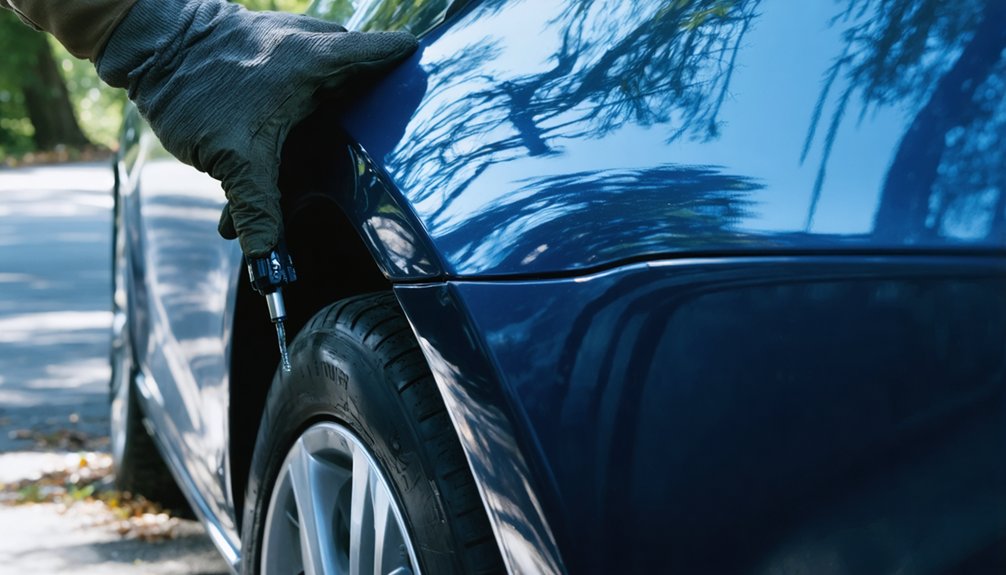

To spot hidden damage when buying a vehicle, one must carefully inspect the body for inconsistencies in paint, dents, or rust. Check for uneven gaps in doors and panels, and look for corrosion near wheel wells. Examine glass for chips and guarantee all lights function properly. Assess tire conditions, undercarriage, and suspension components for wear or damage. Finally, evaluate electronics and engine performance. Understanding these factors is essential to make an informed purchase decision. More perspectives follow.
Highlights
- Inspect the body for paint inconsistencies, dents, rust, and frame abnormalities that could indicate prior damage.
- Check the alignment and fitment of doors, trunk, and panels for uneven gaps suggesting mishandling or repairs.
- Evaluate the undercarriage for significant rust, cracks, and signs of past repairs that raise structural concerns.
- Examine tires for uneven wear patterns, tread depth, and pressure issues that could affect performance and safety.
- Test all electrical systems and power accessories to ensure proper functionality and notice any warning lights.
Inspecting the Body Condition
When evaluating a vehicle’s overall integrity, inspecting the body condition is essential, as it reveals potential underlying issues that may suggest a history of accidents or subpar repairs. A thorough body inspection begins with paint analysis, identifying inconsistencies in texture or color that can indicate past work. Inspecting for dents, rust, or frame abnormalities further uncovers hidden damage. Attention should be given to the alignment and fitment of doors, trunk, and panels; uneven gaps can signify collision repairs. Corrosion near wheel wells and undercarriage is particularly concerning, as it poses structural risks. Additionally, consistent vehicle inspections contribute to maintaining a vehicle’s reliability over time. Finally, evaluating the condition of hinges and latches guarantees functionality, safeguarding against long-term deterioration. Regular inspections help maintain a vehicle’s optimal condition, promoting belonging within a community valuing vehicle safety and longevity.
Examining Glass and Lighting Systems
A thorough examination of glass and lighting systems is crucial in the vehicle inspection process, as both components play significant roles in safety and visibility. During the glass inspection, potential buyers should look for chips, cracks, or improper sealing in the windshield and windows, particularly at the edges where damage may worsen. Inspecting a used car’s undercarriage reveals critical information about structural integrity, which can be related to the glass and lighting systems. Testing exterior lighting functionality is equally essential. An exhaustive lighting evaluation involves checking all headlights, brake lights, and signals to guarantee they operate correctly, along with evaluating the condition of light lenses for clarity. Additionally, any signs of wiring issues, such as flickering lights or corrosion, must be scrutinized. Ensuring that exterior lights are in good working order is vital for safe driving in low visibility conditions. By thoroughly examining these systems, prospective owners can safeguard their investments and guarantee a safe driving experience.
Assessing Tire and Wheel Condition
Tire and wheel condition is a critical aspect of vehicle safety that often goes overlooked during inspections. Extensive tire inspection involves checking tread depth using a quarter or penny to guarantee sufficient grip, while uneven wear may suggest misalignment or inflation issues. Regular tire inspections are crucial for identifying hidden damage before it leads to more significant problems.
Proper tire pressure is essential, as it can substantially impact handling and safety. Inspecting tire sidewalls for cuts or bulges can reveal potential leaks, and evaluating the age of tires is essential, since older tires can become hazardous. Furthermore, proper tread depth ensures safe driving, making it important to verify the tire’s condition thoroughly. Additionally, wheel condition should not be ignored; cracks and dents can compromise structural integrity. Together, these evaluations guarantee a vehicle’s reliability and safety, making them essential for any conscientious buyer.
Evaluating the Undercarriage and Suspension
While inspecting a vehicle, evaluating the undercarriage and suspension is essential for identifying potential hidden damage that could compromise safety and performance. A thorough rust inspection should begin with a frame analysis, checking for bends, cracks, or signs of past repairs indicative of collisions. Excessive rust can substantially weaken structural components, so examining the floor pans and suspension mounting points is vital. Springs and shock absorbers must be inspected for wear, while components like control arms and tie rods need assessment for excessive play or damage. Additionally, guarantee that all steering linkage is free from corrosion and lubricated. Checking fluid levels will also help identify any leaks or signs of neglect. Addressing these elements not only assures the vehicle’s integrity but promotes a sense of belonging in making informed buying decisions.
Testing Electronics and Interior Features
Properly testing the electronics and interior features of a vehicle is essential for guaranteeing a reliable and enjoyable driving experience.
A thorough interior inspection should begin with the electrical systems; all dashboard warning lights must illuminate and extinguish correctly.
Flickering gauges or malfunctioning HVAC systems may indicate underlying faults.
Power accessories like windows, locks, and seats should respond swiftly without any delays, while audio and directional systems need to be crystal clear and fully functional.
Investigating upholstery for odors or stains, and checking for dampness under mats can reveal hidden issues.
Analyzing Mechanical and Engine Health
A thorough evaluation of a vehicle extends beyond its interior features and electronics to encompass the critical assessment of mechanical and engine health.
Prospective buyers should examine engine performance, noting smooth starts, stable idling, and seamless acceleration without unusual noises, all indicative of underlying health.
Inspecting fluid levels is essential; dark oil or rust in coolant can reveal potential wear or head gasket issues that threaten fuel efficiency.
Visual inspections of belts, hoses, and the undercarriage uncover leaks and corrosion that could impair engine function.
Additionally, monitoring for warning lights or signs of prior repairs can prevent unexpected breakdowns.
Prioritizing these tests guarantees that buyers secure a reliable vehicle well-versed in performance and longevity.
Conducting a Comprehensive Road Test
Conducting an exhaustive road test is essential for prospective vehicle buyers to assess how well the car performs under real driving conditions.
Before the road test, a thorough vehicle inspection should be carried out, focusing on key elements such as tire condition, brake function, and suspension alignment.
During the road test, buyers should evaluate vehicle handling, ensuring smooth steering and consistent braking performance.
Assess the engine’s responsiveness and the comfort of the suspension on uneven surfaces.
Don’t overlook safety features, checking systems like airbags and stability control.
Finally, verify electronic systems, including infotainment and directional control.
A scrupulous road test not only reveals operational strengths but also identifies potential hidden damages, informing the buying decision.
Conclusion
In summary, a thorough inspection of a vehicle can reveal hidden damage that may not be immediately apparent. By carefully examining the body, glass, tires, undercarriage, electronics, and engine, prospective buyers can make informed decisions. Conducting an exhaustive road test further guarantees the vehicle’s performance aligns with its condition. By following these steps, buyers can protect themselves from unexpected repair costs, guaranteeing their investment results in a reliable and safe driving experience.
References
- https://blog.tinkerdiy.com/blog/10-used-car-inspection-tips-and-tricks
- https://paintandbody.com/spotting-hidden-damage-after-a-car-accident/
- https://thehomeworkguy.com/diy-vehicle-inspection-checklist/
- https://idrivecertified.com/blog/posts/used-vehicle-inspection-checklist-15-steps-for-smart-buyers
- https://www.identifix.com/blogs/the-ultimate-vehicle-inspection-checklist-a-226-point-guide/
- https://www.sunsethillssubaru.com/blogs/4580/comprehensive-guide-to-car-inspection-checklists-ensuring-your-vehicles-safety-and-compliance/
- https://www.lincoln.com/cmslibs/content/dam/brand_lincoln/en_us/brand/cpo/pdf/LCPO01015_FMFL1388000A_L_VIC_NCR_R02.pdf
- https://www.scribd.com/doc/23800911/Vehicle-Inspection-Checklist
- https://www.simplyfleet.app/blog/20-things-to-check-while-performing-a-vehicle-inspection
- https://www.pa.gov/content/dam/copapwp-pagov/en/penndot/documents/programs-and-doing-business/transit/procurement/documents/vehicle-inspection-checklist-2025-04-14.pdf